Showing posts with label LPacres. Show all posts

25 October 2012

Position Opening: Data Encoder [FILLED]


We are looking for a dynamic and determined person to join our team.

To know more about the position responsibilities and application procedure, click this image below:
Open to Philippine residents only.

24 October 2012

Fishing Down the Marine Food Web

A visual presentation  by Hans Hillewaert, 
as inspired by the work of Daniel Pauly.


The phrase "fishing down the food web" has been very popular in the fisheries industry since the late 1990's, but it is definitely far from being a cliché.

Introduced in this article by Pauly et al. (1998), this phrase simply mean that over time, traditional fisheries has exploited the stocks of large predatory fishes and has now moved on to smaller species, oftentimes farther or deeper in the ocean (sometimes both).

Pauly believes that with this continuing decline, it won't be long before people would start having jellyfish sandwiches. Yikes! Can you imagine yourself having jellyfish meals?

To learn more about this concept, visit www.fishingdown.org. It is recently launched by the Sea Around Us Project to present case studies from around the world that have largely been ignored in the objections to fishing down, and present a brief response to these objections which are largely based on misunderstandings and allegations.

Happy learning!


Written by:
Lealde Pacres-Urriquia
Research Assistant
The SeaLifeBase Project

05 October 2012

Publication in the Nature Climate Change


SeaLifeBase Principal Investigator Daniel Pauly and Project Coordinator Deng Palomares are co-authors in an article recently published in Nature Climate Change (NCC). Entitled "Shrinking of fishes exacerbates impacts of global ocean changes on marine ecosystems," the paper talks about how changes in biogeochemical properties directly affect the ecophysiology of marine water-breathing organisms. In simpler terms, it shows how global warming affect the distribution and reproduction of fishes, notably how fish across different species decrease in size with the continuing rise of water temperature. The data used in this paper was based heavily on FishBase growth data.

This study has been featured by the BBC News.
To access the full paper, click here.

12 September 2012

FishBase and SeaLifeBase in Mundus Maris website

FishBase and the SeaLifeBase are featured in the Biodiversity section of the Mundus Maris website.

FishBase and SeaLifeBase in Mundus Maris

Mundus Maris is a group of scientists, artists, educators, concerned parents from different regions of the world to provide scientific and relevant indigenous knowledge and encourage artistic expression about the marine environment to promote its restoration, conservation and sustainable use.


Posted by:
Lealde Pacres-Urriquia
Research Assistant
The SeaLifeBase Project

04 September 2012

New publication in PLOS ONE


SeaLifeBase Project Principal Investigator Daniel Pauly and SeaLifeBase Project Coordinator Maria Lourdes Palomares are co-authors in a new publication entitled "Gaining Perspective on What We’ve Lost: The Reliability of Encoded Anecdotes in Historical Ecology", published in the peer-reviewed open-access journal PLOS ONE.

Abstract:
Historical data are essential in fisheries management and conservation, especially for species that suffered significant population declines prior to ecological data collection. Within the field of historical marine ecology, studies have relied on anecdotal evidence, such as written accounts by explorers and interviews of different generations of resource users, to demonstrate the former abundance of certain species and the extent of their ranges. Yet, do we all agree on how these anecdotes are interpreted? This study examines the way that different people interpret anecdotes extracted from historical narratives. We outsource a survey to 50 randomly selected people using Amazon Mechanical Turk (www.mturk.com) and ask them to ‘code’ historical anecdotes based on their perceived abundance of species. We perform intercoder reliability tests to show that people's perceptions of historical anecdotes are generally consistent. The results speak to the reliability of using people's perceptions to acquire quantitative data, and provide novel insights into the use of anecdotal evidence to inform historical ecology.
Read and/or download the rest of the paper here.


Posted by:
Lealde Pacres-Urriquia
Research Assistant
The SeaLifeBase Project

30 August 2012

Philippine fisheries and Daniel Pauly in Oceana Magazine


Oceana recently released their Summer 2012 magazine.

The Small Sanctuary Approach


Read the article at pages 8- 11.

Good coastal fisheries stewardship, combined with national policies on quotas, habitat and bycatch, can alleviate poverty.

The status of the marine protected areas, condition of the coastal communities, and municipal fisheries of the Philippines are featured. Find out how commercial fisheries are classified as artisanal fishing in the Philippines.

Ask Dr. Pauly: Are the Oceans Jellifying?


Ask Dr. Pauly at page 13.

People notice jellyfish more these days – or is it the jellyfish that notice more people? In any case, more people are getting stung – a rash of rashes as it were.


Daniel Pauly once again talks about jellyfish and the possible causes of the outbreaks. Is it really because of global warming?

Visit Oceana to know more or click here to read the rest of the magazine.


Posted by:
Lealde Pacres-Urriquia
Research Assistant
The SeaLifeBase Project

24 August 2012

Those slimy stuff on the beach?


If you have been to the beach, surely you would have seen some slimy stuff along the shore. Like this:

Source

These are benthic algae, more commonly known as "seaweed". It has a variety of uses including food, medicine, and fuel. But do you know that this mess can be turned into art?

Introducing Seaweed Art:

Green seaweed from the genus Ulva, also known as 'sea lettuce'.


Nature artist Beth Shady of California, USA gather seaweed along the coast of Monterey Bay, process it into collages, and prints the images to make greeting cards and note cards. Pretty neat, eh?

Delesseria decipiens, Polyneura latissima, Palmaria mollis and Chondracanthus canalculatus

Chondracanthus exasperatus, commonly known as Turkish towel.

Visit Seaweed Art to know more about the art of pressing seaweed or to contact the artist. Enjoy!


Written by:
Lealde Pacres-Urriquia
Research Assistant
The SeaLifeBase Project

23 August 2012

SeaLifeBase in the 2nd Aquatic Wildlife Rescue Manual Series Writeshop


The SeaLifeBase Project (represented by Research Assistant Patricia Sorongon-Yap) has been invited by the Marine Wildlife Watch of the Philippines (MWWP) to participate in the 2nd Aquatic Wildlife Rescue Manual Series Write-shop: Marine Mammals on August 22-24, 2012 in Anilao, Batangas, Philippines.
     
More on this on a separate post. Watch out for it!

06 July 2012

Daniel Pauly in Synergy Online


SeaLifeBase Project Principal Investigator Daniel Pauly is cited in the July 2012 issue of Synergy Online, journal of the Faculty of Science, University of British Columbia (UBC).

In the article Jellyfish Rising, Pauly mentioned that the scope of the jellyfish populations study can further be extended into a global scale by combining published scientific data with other unpublished data and observations, which can then result to the "best available scientific estimate" of the jellyfish blooms.


Visit Synergy to read the rest of the article.


Posted by:
Lealde Pacres-Urriquia
Research Assistant
The SeaLifeBase Project 

05 July 2012

Oceans and Fisheries on the Praxis Discussion Series 2012


Praxis is a monthly panel discussion series established in 2009 by the World Bank to exchange ideas and debate on key international development initiatives and issues.

Last May, the focus was on Ocean and Fisheries, primarily on marine conservation and development.
Click play and listen to what they have to say.


Posted by:
Lealde Pacres-Urriquia
Research Assistant
The SeaLifeBase Project

26 June 2012

Food For Thought Seminar Series 2012


The SeaLifeBase Project Scientific Adviser Nicolas Bailly and Project Coordinator Deng Palomares participated in the Food For Thought seminar series of the WorldFish Center in Penang, Malaysia. 
     
They discussed the status and projects of both SeaLifeBase and FishBase, including the current efforts in publishing reports on marine species list by area. 
    
Click play to view the entire presentation and listen to the audio transcription:

22 June 2012

FishBase and SeaLifeBase: an overlap?


Earlier this week, one of our Facebook fans wrote on our wall and asked:
  
Does SeaLifeBase overlap with FishBase?
   
First, let us just say that it is always exciting to hear from our users and "fans".  Second, that this is a very good question.  After all, 1) our names sound alike, 2) our websites are nearly identical, and 3) we generally provide the same type of data (distribution and biology).
  
But, the answer to that question is: No, it does not.

Overlap?

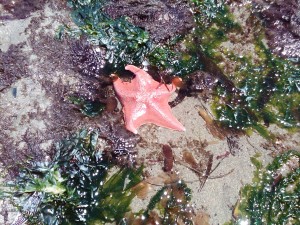
While FishBase covers only fishes, SeaLifeBase assures data for the "non-fishes": whales, dolphins, turtles, sea birds, snakes, crabs, lobsters, sea shells, shrimps, sea cucumbers, starfishes, sponges and all other marine organisms that are not fish.  FishBase, with its 22 years of existence/experience, was used by SeaLifeBase as the shell and structure in delivering information for non-fishes to the public.
   
SeaLifeBase aspires to create and maintain a global information system that provides vital information for non-fish marine organisms --- just as what FishBase has achieved for fishes.  SeaLifeBase is still young at 6 years of existence, and with more than 200,000 non-fish species, we have a long way to go.  And we are going, slowly but surely.

Written by:
Lealde Pacres-Urriquia
Research Assistant
The SeaLifeBase Project

Image manipulation by:
Jeniffer Espedido
Research Assistant
The SeaLifeBase Project